Research Themes
-
- Documenting anthropogenic impacts on mollusc calcification
- Interpreting molluscan shells as records of Holocene environments
- Understanding environmental and biological controls on mollusc biomineralization
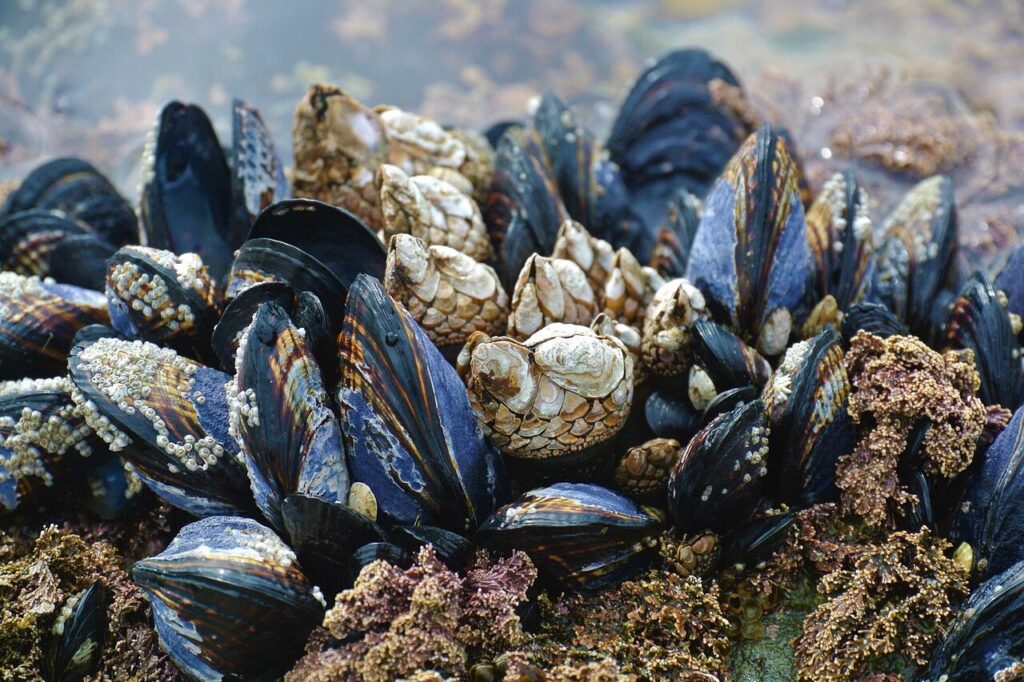
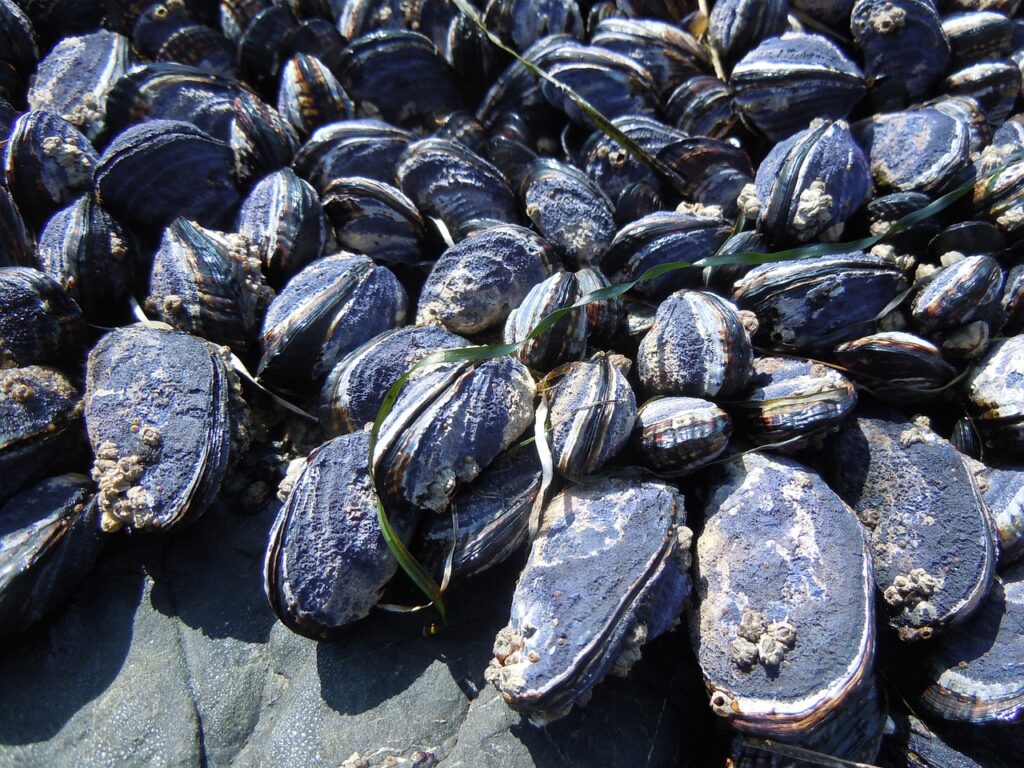
All of these themes are focused on ecologically, economically, and/or culturally significant mollusc species (e.g., edible clams, mussels, oysters)
Research Questions
-
- How are shells responding to warming and acidifying oceans?
- Are shells recording pollution from land-use change, oil spills, and wildfires?
- How do latitudinal and geographic differences influence a mollusc species’ responses to changing climate conditions?
- How do shell responses to environmental stressors vary across habitats and species?
Research Methods
-
- Optical microscopy via a ZEISS AxioZoom v. 16
-
- Statistical data-synthesis methods (R programming language)
-
- Morphological measurements
-
- Scanning electron microscopy (SEM)
-
- Geochemical analysis (stable isotopes, trace elemental ratios)
Research Policies
The ideal ShArE lab member is interested in shells, coastal environments, and climate change in the past or present. We also value a commitment to just and ethical science (e.g., minimally invasive methods, fieldwork only when necessary). We draw from existing datasets or museum collections as often as possible, rather than conducting extractive or invasive fieldwork. The ShArE lab strives to provide an inclusive environment for aspiring scientists of any background, race/ethnicity, sexual orientation, gender, or dis/ability.
Recent Publications
Vriesman, V.P.,Bean, J.R., Palmer, H.M., Banker, R.M.W., 2024. Interpreting life-history traits, seasonal cycles, and coastal climate from an intertidal mussel species: Insights from 9000 years of synthesized stable isotope data. PLOS One, https://doi.org/10.1371/journal.pone.0302945
Palmer, H.M., Vriesman, V.P., Livsey, C.M., Fish, C.R. and Hill, T.M., 2023. Holocene climate and oceanography of the coastal Western United States and California Current System. Climate of the Past, https://cp.copernicus.org/articles/19/199/2023/
Vriesman, V.P., Carlson, S.J. and Hill, T.M., 2022. Investigating controls of shell growth features in a foundation bivalve species: seasonal trends and decadal changes in the California mussel. Biogeosciences, 19(2), pp.329-346. https://doi.org/10.5194/bg-19-329-2022
Palmer, H.M., Padilla Vriesman, V., Banker, R.M. and Bean, J.R., 2022. Compilation of a database of Holocene nearshore marine mollusk shell geochemistry from the California Current System. Earth System Science Data, 14(4), pp.1695-1705. https://essd.copernicus.org/articles/14/1695/2022/
Vriesman, V.P., 2022. Bivalve Biomineralization in a Changing Climate: Investigating Marine Mussel Calcification Patterns over Seasons to Millennia (Doctoral dissertation, UC Davis). Portions available upon request.